Advisory Development Programme · 2026
Continuity
Beyond
Governance
Most advisors are trained to improve structures. Few are trained to recognise the human conditions that determine whether those structures can actually be lived.
Governance explains structure. PAS helps explain implementation.
Before developing PAS, Natalia founded and scaled one of the leading consumer brands within her family's agribusiness group in Colombia, giving her first-hand experience of ownership, governance, succession and family dynamics from inside a business family system.
She later spent more than a decade working across Europe in complex organisational environments involving multiple stakeholders, competing interests and long-term strategic decision-making. Today, her work integrates family enterprise advisory, somatic intelligence, attachment theory, psychodynamics and neuroscience to help advisors, owners and family leaders recognise the human dynamics that influence continuity across generations.
Many governance challenges are not governance problems.
They are authority problems. Belonging problems. Trust problems. Identity problems. Legacy problems.
Human problems that have migrated into the governance field.
And until they are recognised, even the most sophisticated governance structures struggle to take root.
| Governance helps explain… | PAS helps explain… |
|---|---|
| Structures | Implementation |
| Decisions | Conditions influencing decisions |
| Conflict | What generates conflict |
| Succession plans | Resistance to succession |
| Governance design | Governance adoption |
The cost of not seeing
When implementation challenges are mistaken for governance challenges, families often continue investing in structures while the underlying conditions remain unchanged.
The consequences can include
- —Succession transitions delayed for years despite clear plans
- —Governance structures that exist but are rarely used
- —Escalating relational tension between generations
- —Next-generation disengagement
- —Repeated conflict around ownership and decision-making
- —Loss of trust across branches of the family
- —Increased implementation costs for advisors and families alike
Because continuity depends on more than structure. It depends on whether the family system can sustain what has already been decided.
What PAS helps professionals do
- →Detect implementation risk before it becomes visible
- →Distinguish governance problems from human systems problems
- →Recognise succession resistance in real time
- →Increase governance adoption across generations
- →Facilitate difficult conversations without becoming unconsciously driven by the system
What PAS trains participants to notice
In family enterprise conversations, the most important information is often not spoken.
Sometimes the first sign of implementation risk appears before anyone has named a problem.
Succession
Succession that never quite moves forward
The successor is capable. The transition plan exists. Everyone agrees. And yet something keeps delaying the transition.
What if the challenge is no longer strategic? What if the system is struggling with authority, legitimacy or identity?
Governance
Governance that exists but is not lived
The structures are in place. The family council meets. The agreements have been signed. Yet key decisions continue to happen elsewhere.
What if the issue is not governance? What if the issue is trust? When a structure is accepted formally but bypassed relationally, the system is often communicating something governance alone cannot explain.
Conflict
Conflict that keeps returning
The topic changes. The emotional charge remains. The family resolves one issue only to find another emerging months later.
What if the conflict is not the problem? What if the conflict is the symptom?
Traditional advisory frameworks focus on what is being said. PAS helps advisors recognise what is also being communicated through the system itself — because continuity challenges often announce themselves long before they become governance problems.
A glimpse of the work
A next-generation family member described feeling caught between loyalty to the family business and the need to step out of an operational role she could no longer sustain.
As we stayed with what was happening in the body, the conversation shifted. The issue was no longer only about role or structure. It became visible how much responsibility her system had learned to carry.
At one point she stood up, took a physical step back and instinctively raised her arms in front of her body — not aggressively, but as a boundary. Her breathing deepened. Her posture reorganised. She described feeling "more like a tree". Grounded. Centred. Able to hold herself differently.
From that place, she found the words she had been unable to say to her family system for years:
That sentence did not emerge from strategy. It emerged from a different internal position — one where she no longer needed to carry the system in the same way.
What changed was not the succession plan. What changed was the successor's relationship to responsibility. The governance structure did not change. The implementation capacity did.
Anonymised · Next-generation member of a family enterprise system
The form of intervention is always adapted to the advisor's role, context and level of relational access inside the system.
The human conditions of continuity
Most continuity frameworks focus on structures.
PAS focuses on the human conditions that determine whether those structures can actually live.
Authority
Belonging
Trust
Identity
Attachment
Legacy
Because continuity is not only a governance challenge. It is a human systems challenge.
Families rarely struggle because they lack solutions.
They struggle because they cannot yet sustain them.
The structure is known
For decades, family enterprise research has helped us understand the structural dimensions of continuity.
Family. Ownership. Enterprise.
These models remain essential.
Family axis
Ownership axis
Enterprise axis
These models help explain how continuity evolves across family, ownership and enterprise systems.
What they do not explain is why the same patterns often persist across generations, across transitions and across governance structures.
Why succession remains stalled.
Why authority is not transferred.
Why governance is designed but not adopted.
Why the same conflicts return.
PAS helps professionals and family leaders recognise the implementation conditions operating within and between these evolving systems.
PAS is a way of seeing
Not a technique. Not a diagnostic model. Not another governance framework.
A way of recognising what influences succession, ownership and governance long before it becomes visible in behaviour. A way of perceiving the human dynamics that determine whether continuity can actually be sustained.
Governance explains structure. PAS helps explain implementation.
Governance explains how continuity should happen. PAS helps explain why it often doesn't.
Why this field is emerging
Traditional governance explains structure.
The next frontier of continuity work is understanding the human conditions that determine whether those structures can actually be lived.
PAS was developed to help make those conditions visible.
Foundations
Three domains. One primary. Two in service of it.
Primary domain
Family Enterprise, Ownership & Continuity
The domain PAS exists to serve. Grounded in FEA, KDVI, INSEAD family enterprise research and the Gersick/Davis three-circle model — not in generic leadership development.
Supporting discipline
Systems Leadership & Group Dynamics
How authority, complexity, role and change move through ownership systems across generations. Drawing on ORSC, Peter Hawkins and systemic leadership traditions.
Differentiating dimension
Somatics, Attachment & Neuroscience
Somatic Experiencing®, Polyvagal Theory, IFS, attachment-informed work — applied specifically to ownership dynamics. The dimension no other family enterprise programme develops in this way.
Competitive advantage
The professionals most sought after by family enterprise systems over the next decade will not necessarily be those with the most technical knowledge.
They will be those capable of recognising what prevents families from implementing the solutions they already know.
PAS develops that capacity.
The professional opportunity
The professionals most trusted by families over the next decade will not necessarily be those with the most frameworks.
They will be those able to recognise implementation risk before it becomes visible.
Those able to distinguish a governance challenge from a human systems challenge.
Those able to recognise when a succession process is technically ready but relationally blocked.
Those able to see the difference between agreement and readiness.
Those able to identify when governance exists formally but has not yet become lived practice.
As governance knowledge becomes more widely available, technical expertise alone becomes less differentiating.
The emerging advantage lies elsewhere.
In perception.
In timing.
In implementation.
In the ability to recognise what a family system is communicating before it becomes a governance problem.
The professionals and family leaders who develop this capacity are often invited into more complex conversations. Trusted with more sensitive transitions. Included earlier in moments of uncertainty. And remembered long after the governance project itself has ended.
PAS develops that capacity.
The professional return
For advisors, facilitators and ownership system members working with families over years, the return is not another framework.
It is fewer repeated conversations.
Earlier recognition of implementation risk.
Greater precision in difficult moments.
Stronger governance adoption.
And a higher quality of intervention when continuity is most at stake.
In complex family systems, one conversation can alter the trajectory of trust, authority, succession and ownership for years.
PAS develops the capacity to meet those conversations differently.
After this programme you will be able to
- →Recognise implementation risk before it becomes visible
- →Distinguish structural problems from relational problems
- →Detect inherited loyalties influencing succession
- →Recognise authority dynamics in real time
- →Read nervous-system responses influencing decision-making
- →Facilitate difficult conversations without becoming unconsciously driven by the system
- →Intervene earlier and with greater precision
- →Support continuity with greater stability and less relational friction
- →Recognise how perception and positioning influence intervention
- →Recognise somatic signals influencing authority, collaboration and decision-making
- →Identify recurring conflict patterns before they become governance challenges
- →Strengthen the human conditions required for long-term continuity
- →Improve governance adoption across generations
Helping families move through succession, governance and ownership transitions with greater stability, stronger implementation and less relational friction.
Before PAS / After PAS
How perception changes the quality of intervention.
Before PAS
After PAS
The quality of continuity work changes when the professional — or family leader — can recognise what the system is communicating before it becomes a governance problem.
"One of the most sophisticated and differentiated programmes I've seen in this area."
— Alev Yakal Sahlan
Operations Executive & Board Member · Borochemie International · Turkey
Implementation moments
Where PAS changes what becomes visible.
Implementation moment
Succession That Remains Stalled
The founder speaks calmly about succession. Yet each time the transition becomes concrete, the room tightens.
A clear transition plan exists. The successor is capable. The timeline has been agreed. Publicly, the founder supports the transition. Privately, movement remains slow.
What else may be influencing the situation?
Questions of authority, legitimacy, identity and role transition may still be unresolved within the system.
What changes in practice?
Instead of refining the plan again, the advisor, facilitator or family leader becomes more attentive to whether the system can actually sustain the transfer of authority.
Implementation moment
Governance That Exists But Is Not Lived
The governance structure is respected in principle. Yet the real decisions continue to happen elsewhere.
The family council meets. Agreements have been signed. Roles are defined. Still, influence continues to move through informal conversations, old alliances or unspoken hierarchies.
What else may be influencing the situation?
Formal authority may not yet carry the same legitimacy as the relational patterns that preceded it.
What changes in practice?
Rather than reinforcing the structure too quickly, the advisor, facilitator or ownership system member becomes more attentive to the gap between designed authority and lived authority.
Implementation moment
Conflict That Keeps Returning
A sibling meeting ends with agreement. Yet nobody in the room seems fully convinced that anything has truly changed.
One disagreement is resolved. Months later, another emerges with a similar emotional charge. The topic changes. The pattern remains.
What else may be influencing the situation?
The conflict may be expressing a recurring relational pattern rather than a discrete issue.
What changes in practice?
Instead of treating each disagreement in isolation, the advisor, facilitator or family leader begins to recognise the pattern the system keeps repeating.
Introducing PAS
PAS integrates family enterprise advisory, somatic intelligence, attachment theory, psychodynamics and neuroscience to help advisors recognise the human dynamics that influence continuity across generations.
Presence · Love · Safety
Presence
Developing the capacity to observe what is happening beneath the surface. Presence allows advisors to notice what is being communicated beyond language: shifts in tone, breath, posture, activation, withdrawal, silence and timing.
The foundation of perceptual accuracy inside complex family systems.
Love
Love understood not as sentiment, but as the conditions that create belonging, trust, healthy boundaries and continuity across generations.
In family enterprise systems, love is often expressed through loyalty, protection, sacrifice and inherited roles. PAS helps advisors recognise when love supports continuity — and when unconscious loyalty prevents movement.
Safety
Safety is not comfort. It is the biological and relational condition that allows a system to stay present long enough to face what is difficult.
Understanding how nervous system regulation shapes decision-making, leadership transitions and the capacity for meaningful collaboration.
Not therapy. Not coaching. Not diagnosis. A deeper capacity to perceive the human conditions that shape continuity.
Who this programme is for
This programme is designed for professionals and family members working directly with continuity, ownership and governance across generations.
Participants do not need a background in psychology, coaching or therapy. What is required is direct involvement in the human realities of continuity, succession and governance.
How the learning happens
A 12-session applied learning process for seeing what usually remains beneath the surface.
This is not a lecture-based programme.
Each session combines conceptual framing, applied observation, case reflection and integration.
Participants learn to recognise how authority, belonging, identity, nervous-system responses and inherited relational patterns influence continuity, succession and governance in real time.
The work is practical, but not formulaic.
Participants are not trained to diagnose families. They are trained to perceive more accurately, intervene more precisely and remain grounded inside complex ownership systems.
12
Live Sessions
Twelve live online sessions combining conceptual frameworks, observation practice and applied reflection.
Family Enterprise Case Discussions
Real family enterprise situations explored through the lens of implementation conditions, continuity and governance adoption.
Applied Observation Exercises
Learning to recognise authority, belonging, trust, succession readiness and implementation risk in real time.
Implementation Labs
Practising how PAS can inform intervention within governance, ownership and continuity conversations.
Peer Learning
Cross-disciplinary reflection with advisors, ownership leaders and continuity practitioners.
Faculty Guidance
Direct engagement with faculty throughout the programme to deepen observation, application and integration.
Between-Session Integration
Structured observation and application between sessions, bringing PAS into participants' existing professional contexts.
Final Continuity Synthesis
A final integration process connecting PAS to each participant's advisory, ownership or leadership role.
By the end of the programme, participants are not simply familiar with a new framework. They have developed a more precise way of seeing.
Programme structure
12
Sessions · 90 min weekly
Cohort Format
Small group
Real Cases
Your actual situations
EN Language
Online · Global
Advisory Cohort · Founding Group
September 2026
8 September – 24 November 2026
Tuesdays · 14:30 CET · 90 min
(7 Oct and 4 Nov: Wednesdays)
Session Dates
8, 15, 22, 29 Sep
7 Oct · 13, 20, 27 Oct
4 Nov · 10, 17, 24 Nov
Programme curriculum
12 modules. Three levels. One integrated process.
Level I
Presence
The somatic foundations of leadership, authority and decision-making.
By the end of this level, advisors will recognise how biology and authority influence decision-making inside family systems.
The nervous system governs decisions before the mind names them. Participants learn to recognise how physiological states — in founders, successors and ownership groups — shape authority conversations before they become explicit. What participants notice: the somatic cost of carrying authority without sufficient internal backing. How it applies: understanding why succession conversations stall even when the plan is technically sound.
Significant patrimony does not only accumulate in accounts — it accumulates in the nervous system. Participants learn how multigenerational wealth alters how families perceive threat, make decisions under pressure and experience authority across generations. What participants notice: inherited vigilance and the somatic load of legacy as live variables in stewardship conversations. How it applies: reading ownership behaviour as an expression of accumulated nervous-system history, not only personality or strategy.
Presence is not a personal quality — it is a professional capacity. Participants develop the ability to remain available to what is actually happening in the room when succession, authority and identity are simultaneously at stake. What participants notice: when their own nervous system narrows perception under relational pressure. How it applies: staying available to the system without over-functioning or withdrawing during governance and ownership conversations.
Invisible loyalties to previous generations can constrain leadership readiness and succession in ways that no governance structure resolves. Participants learn to identify how inherited responsibility, belonging and protection shape the capacity to step forward — or step back — within the family system. What participants notice: relational loyalty operating beneath stated commitment to transition. How it applies: understanding why next-generation members may publicly support succession while privately remaining unable to fully occupy authority.
Level II
Love
Belonging, attachment and the relational inheritance that shapes continuity.
By the end of this level, advisors will identify hidden loyalties and relational patterns influencing continuity.
The phenomenological layer beneath governance conversations — what everyone perceives but no one says. Participants learn to read invisible presences, historic exclusions and unprocessed emotional events that continue organising how decisions are made. What participants notice: how the past continues to occupy the room in ownership conversations. How it applies: recognising when a current governance difficulty is also being shaped by relational history that precedes the present generation.
Competing loyalties shape succession readiness, ownership transitions and next-generation development — often without the individuals involved being aware of them. Participants learn how inherited relational roles are carried somatically across generations. What participants notice: when a family member's stated position and their lived behaviour diverge. How it applies: identifying the relational loyalty that is preventing movement before it is named as resistance or disengagement.
The relational architecture of sibling partnerships, cousin consortiums and controlling-owner transitions — read somatically, not only structurally. Participants explore how Gersick and Davis system stages are experienced in the body of the family. What participants notice: how sibling dynamics redistribute when formal governance is introduced. How it applies: facilitating ownership transitions at the relational level required for governance structures to actually hold.
Forces that shape family enterprise systems without being explicitly named — and that organise what can and cannot be decided, inherited or transferred. Participants develop the perceptual capacity to read these dynamics in real time without naming them prematurely. What participants notice: the information carried in silence, timing and non-verbal signals during ownership conversations. How it applies: knowing when to hold what you see and when to introduce it into the conversation.
Level III
Safety
Embodied governance, succession and the conditions for continuity.
By the end of this level, advisors will understand the conditions that allow governance and succession to be sustained across generations.
Why governance structures that are technically sound often remain on paper — and what it takes for families to actually inhabit them. Participants explore the distinction between governance as formal architecture and governance as lived practice. What participants notice: the relational and somatic conditions that are present when governance is genuinely inhabited, versus when it is formally accepted but not yet trusted. How it applies: designing governance implementation processes that account for the human conditions required to sustain them.
Business life cycles — start-up, expansion, maturity, renewal or decline — as somatic states in the family system. Participants explore how the nervous system of the ownership group shapes strategic decision-making and why the same governance structure produces different results at different moments in the system's life. What participants notice: how regulatory capacity in the ownership group shifts across different enterprise stages. How it applies: calibrating governance and succession conversations to the actual somatic and relational state of the system.
Succession is not only a legal and financial process — it is a somatic one. Participants explore the experience of the founder releasing authority without losing identity, and the next generation receiving ownership without it feeling like displacement. What participants notice: the physical and relational signals that indicate a succession process is approaching its human threshold. How it applies: supporting the conditions that allow authority transfer to move rather than repeatedly approaching and deferring.
The human conditions required for authority transfer, stewardship and continuity to be sustained across generations. Participants explore what allows a family enterprise system to relate to legacy not only as preservation, but as living continuity. What participants notice: the difference between families that carry legacy as burden and those that carry it as orientation. How it applies: facilitating continuity conversations that are grounded in intergenerational stewardship rather than fear of loss or obligation.
Participants will learn to
- →Detect succession resistance before it becomes visible
- →Recognise hidden authority dynamics
- →Identify implementation risk in real time
- →Increase governance adoption
- →Navigate conflict without becoming part of the system
- →Read nervous-system responses influencing decision-making
- →Distinguish structural problems from relational problems
- →Recognise inherited loyalties influencing succession
The observer matters
Most professional programmes focus on frameworks. PAS develops the quality of perception. Because in complex family systems, what participants notice, assume, interpret and respond to influences what becomes possible.
How you perceive. How you interpret tension. How you respond to uncertainty. How you remain grounded when authority, identity, succession and legacy collide.
The earliest signals of implementation risk are often relational before they become strategic.
Participants develop greater awareness of:
- how their own reactions shape their reading of the system
- assumptions and expectations that influence how situations are interpreted
- role tension and positional pressure inside complex systems
- over-identification with one part of the system at the expense of the whole
- a tendency to intervene prematurely before the system is ready to sustain change
- the pull toward over-functioning when a system is under pressure
- the authority required to hold difficult conversations without resolving them prematurely
- relational positioning and its effects on what becomes possible in the room
Explore the PAS toolkit
The tools are not the methodology.
The tools simply help make visible the human dynamics beneath continuity, governance and succession.
Ventral / Sympathetic / Dorsal Mapping
A real-time reading of nervous-system states inside family enterprise conversations. Participants learn to recognise what is actually available in the room before any content is addressed.
Wealth Nervous System Mapping
Explores how wealth, patrimony and legacy shape nervous-system responses across generations. Makes visible inherited vigilance, responsibility overload and relational patterns around stewardship.
Somatic Load Map — Four Role Positions
Helps identify whether a family member is occupying a role with sufficient internal support. The four positions: Embodied · Functional Freeze · Withdrawal · Role Saturation.
Intergenerational Agency Constellation
A practice designed to reveal invisible loyalties that may be limiting leadership readiness, succession or authority transfer.
Phenomenological Family Map
Maps not only current relationships but also invisible presences, exclusions and unresolved historical dynamics that continue to influence present-day decisions.
Invisible Loyalties Constellation
Makes visible inherited roles and relational loyalties that continue to influence behaviour, belonging and decision-making.
Sibling Partnership Constellation
Explores sibling dynamics, informal hierarchies, alliances and relational structures influencing continuity.
Tracking Unresolved Historic Dynamics
A real-time practice for recognising which historical events or unresolved dynamics continue to shape current conversations.
Embodied Three Circles + Role Clarity Exercise
A lived application of the Family / Ownership / Enterprise model. Participants learn to inhabit governance structures rather than merely understand them.
Chaos → Coordination → Cohesion Constellation
Helps identify the developmental phase of the ownership system and the conditions required for movement.
Passing the Baton™ + Founder Who Cannot Let Go
A practice focused on authority transfer, founder identity and successor readiness.
Embodied Vision to 100 Years Constellation
A future-oriented practice helping participants explore continuity, stewardship and legacy across generations.
From the field
"Natalia holds space in a way I rarely encounter: completely neutral, without ever feeling distant. She is fully present — body and soul — and that is what allows conversations to open that would otherwise stay closed. In family enterprise work, that capacity is rare and consequential."
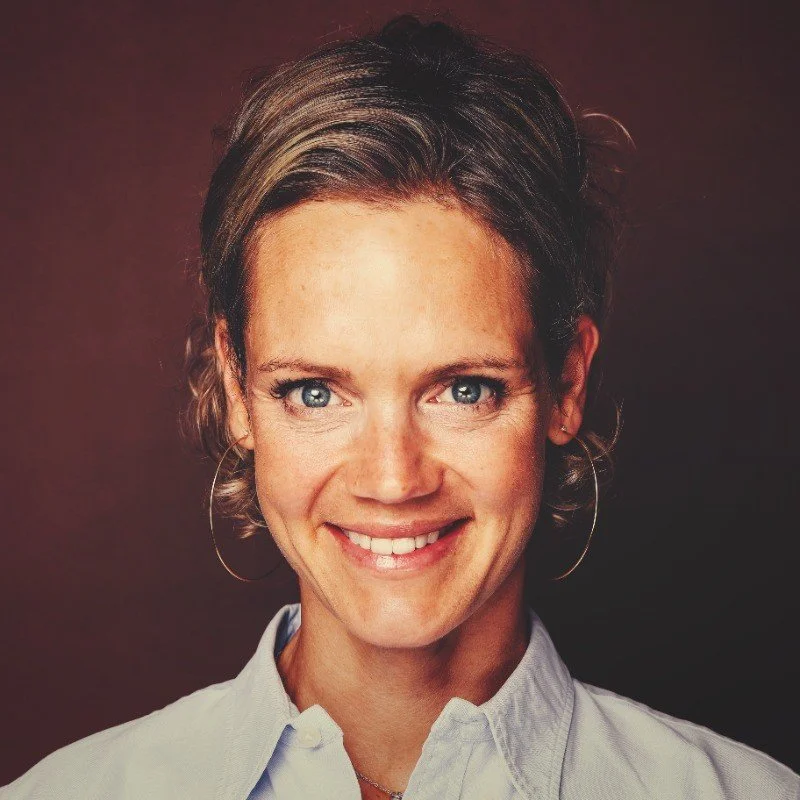
"The session was intense, grounding and relieving all at the same time. It took me almost two weeks to fully process. What stayed with me most was becoming much more aware of where things were showing up in my body — and learning to read those sensations as information rather than automatically bypassing them. Natalia's calm presence made me feel safe and contained, and she worked at my pace. The shifts didn't feel intellectual or performative. They felt physical, relational and very real. There was a real sense of relief — not because everything was fixed, but because something in my system no longer felt like it had to carry things in the same way."

Intellectual lineage
PAS was not developed from a single discipline.
It emerged at the intersection of family enterprise, ownership, systems leadership, somatic intelligence, attachment theory, psychodynamics and neuroscience.
Its intellectual lineage is informed by several fields that rarely speak to each other directly, yet all illuminate different dimensions of continuity.
Family Enterprise, Ownership & Continuity
Informed by
- James E. Hughes Jr.
- Ivan Lansberg
- John A. Davis
- Kelin Gersick
- Dennis Jaffe
- Family Firm Institute (FFI)
- Family Enterprise Advisors (FEA)
- INSEAD Family Enterprise Research
- Three-Circle Model
Systems Leadership & Group Dynamics
Informed by
- Peter Hawkins
- ORSC
- ORSHY
- Tavistock Tradition
- Systems Psychodynamics
- Role Theory
- Complexity Leadership
Somatics, Attachment & Neuroscience
Informed by
- Peter Levine
- Deb Dana
- Stephen Porges
- Gabor Maté
- Richard Schwartz
- Somatic Experiencing®
- Polyvagal Theory
- Attachment Theory
- IFS
Human Development & Family Systems
Informed by
- Murray Bowen
- Family Systems Theory
- Psychodynamic Perspectives
- Intergenerational Pattern Recognition
- Human Development
Faculty

Natalia Cacciari Garavito
Founder · PAS Method & PAS Family Enterprise Observatory
The PAS Family Enterprise Observatory is an ongoing research and observation initiative exploring the implementation conditions that influence succession, governance adoption, ownership transitions and continuity across generations.
Raised within a second-generation entrepreneurial family in Colombia, Natalia founded and developed one of the leading consumer brands within her family's agribusiness group — bringing direct operational and relational experience from inside a family enterprise system.
Founder of the PAS Method and PAS Family Enterprise Observatory — an emerging initiative dedicated to studying the human conditions that influence continuity, succession and governance across generations.
Her work has been informed through direct engagement with family enterprise leaders, ownership systems, advisors and governance professionals across Europe, Latin America and the Middle East.
Before developing PAS, she spent more than a decade working across Europe in complex organisational environments involving multiple stakeholders, competing interests and long-term strategic decision-making.
Her work integrates family enterprise advisory, somatic intelligence, psychodynamics, attachment theory and neuroscience into a practical framework for recognising what influences implementation long before it becomes visible in behaviour.
Sessions and advisory work are held in English, Spanish or French.
Natalia does not approach family enterprise continuity only as an external advisor. She approaches it from the inside of an ownership system, from the lived experience of entrepreneurship within a family enterprise, and from two decades of observing how human systems either support or resist implementation.
Her current work brings PAS into the family enterprise field as an emerging interdisciplinary lens for understanding the human conditions behind succession, ownership and governance adoption.
This is not presented as a replacement for established family enterprise education. It is a complementary capacity for those who already understand the importance of governance and want to understand what determines whether governance can actually be lived.
A different kind of professional development
Most programmes teach frameworks.
Some teach facilitation.
Very few change how a professional sees.
PAS was created for advisors, ownership leaders and continuity practitioners who already understand governance — and want to understand what determines whether governance can actually live.
If the ideas in these pages have felt familiar, challenging or quietly recognisable, you may already be seeing some of the questions PAS was designed to explore.
The founding cohort will be intentionally small.
Not to create exclusivity, but to preserve the depth of discussion, case reflection and applied learning this work requires.
If this perspective feels relevant to your work, we invite you to explore whether the programme may be a fit.
How to apply
Three steps. Participation is intentionally selective.
The cohort is kept small to preserve the depth of discussion, case work and peer learning. Selection is based on professional fit, experience and the composition of the group.
Step 1
Submit your application
A short form covering your current context and what brings you to this programme.
Step 2
Review for professional fit
Applications are reviewed for professional relevance and cohort composition. You will hear back within 5 working days.
Step 3
Receive enrollment details
Qualified applicants receive full enrollment details and next steps to secure their place.
The future of family enterprise advisory will not belong only to those who understand governance.
It will belong to those who understand the human systems that determine whether governance can live.
Explore your fit for the founding cohort →